
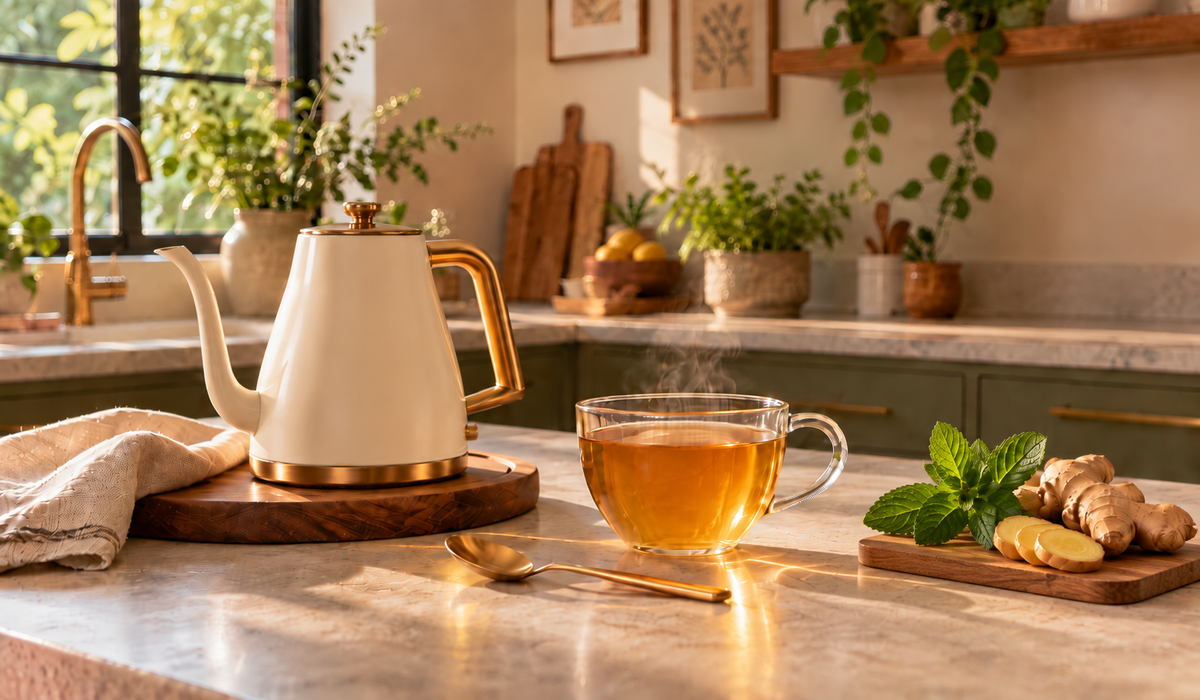
A warm cup of tea can be more than a cozy ritual. In herbalism, tea is one of the simplest ways to work with plants, and digestive herbs are a great place to start.
As a trained herbalist, I often think about herbs in terms of their actions, or the ways they traditionally work in the body. You’ll see a few of those terms throughout this guide. Carminatives are aromatic herbs traditionally used to support digestion and help ease occasional gas and bloating. Demulcents are herbs rich in soothing, mucilaginous compounds, while nervines are herbs traditionally used to support the nervous system and promote calm.
From traditional Ayurvedic CCF tea to soothing marshmallow root, these six blends offer different ways to explore digestive herbs, one cup at a time.
About the author: Abigail McShinsky is a trained herbalist and Content & Education Manager at MegaFood.
A note before you brew: Herbs can interact with medications and may not be appropriate for everyone. Consult your healthcare provider before drinking these teas if you are pregnant, nursing, taking medication or have a health condition.
1. Ayurvedic CCF Tea
Cumin + Coriander + Fennel
CCF tea, named for its three ingredients, cumin, coriander and fennel, is a traditional Ayurvedic digestive tea. All three seeds are aromatic carminatives, a class of herbs traditionally used to support healthy digestion and ease occasional gas and bloating.
To make: Lightly crush equal parts cumin, coriander and fennel seeds. Steep 1–2 teaspoons of the mixture in 8–12 ounces of hot water for 10–15 minutes. Strain and enjoy.
2. Ginger Fennel Tea
Ginger + Fennel + Chamomile
This blend brings together three classic digestive herbs. Ginger is a warming aromatic that supports healthy digestion, while fennel is a traditional carminative. Chamomile does double duty as both a gentle digestive herb and a nervine, an herbal term for plants traditionally used to support relaxation and the nervous system.
To make: Combine sliced fresh ginger, lightly crushed fennel seeds and dried chamomile. Steep covered in hot water for 10–15 minutes, then strain.
3. Minty Digestive Tea
Peppermint + Fennel + Ginger
Peppermint, fennel and ginger are all aromatic carminative herbs, making this a classic combination for an after-meal cup. The cooling flavor of peppermint balances warming ginger, while fennel adds a naturally sweet, anise-like note.
To make: Combine peppermint leaf, lightly crushed fennel seeds and sliced fresh ginger. Steep covered in hot water for 10–15 minutes, then strain.
4. Calm Belly Tea
Chamomile + Lemon Balm + Fennel
The digestive and nervous systems are closely connected, and this blend brings herbs traditionally used for both together in one cup. Fennel is a classic carminative, while chamomile and lemon balm are gentle nervines traditionally used to promote calm. Both chamomile and lemon balm also have a long history of use as digestive herbs.
To make: Combine chamomile, lemon balm and lightly crushed fennel seeds. Steep covered in hot water for 10–15 minutes, then strain.
5. Fennel Chai
Fennel + Ginger + Cinnamon + Cardamom
This caffeine-free chai-inspired blend is packed with warming, aromatic carminative herbs. Fennel, ginger, cinnamon and cardamom have all been traditionally used to support digestion, while their naturally fragrant plant compounds create the familiar warmth and complexity of chai.
To make: Combine lightly crushed fennel and cardamom with sliced fresh ginger and a cinnamon stick. Simmer gently in water for 10–15 minutes, strain and enjoy. Add your favorite milk or plant-based milk for a creamier cup.
6. Soothing Marshmallow Root Infusion
Marshmallow Root
Not every digestive tea needs to be aromatic. Marshmallow root is a demulcent herb, meaning it contains mucilage that takes on a slippery, gel-like texture in water. Traditionally, demulcent herbs like marshmallow have been used to soothe and coat irritated tissues, including those of the digestive tract.
A cool infusion is an especially good way to prepare marshmallow root because it helps extract those soothing, mucilaginous compounds.
To make: Add 1–2 tablespoons of dried marshmallow root to 8–12 ounces of cool or room-temperature water. Cover and let infuse for several hours or overnight, then strain.
Marshmallow has a mild, earthy flavor on its own. For a more flavorful infusion, try adding a little cinnamon, fresh ginger, orange or lemon peel, or another favorite aromatic herb. You can also add a squeeze of lemon or a little honey after straining.
A Little Herbal Know-How for Your Next Cup
You don’t need to memorize herbal terminology to make a good cup of tea, but knowing a few traditional categories can help you understand why certain herbs show up together again and again.
Carminatives bring aromatic digestive support. Nervines can be useful when stress and digestion overlap. Demulcents offer a different kind of support through their naturally soothing mucilage.
Learning these herbal actions can also make it easier to experiment with your own combinations. Start with the blends above, pay attention to what you enjoy, and let your tea cabinet become another way to bring a little herbalism into your everyday routine.


Leave a comment
This site is protected by hCaptcha and the hCaptcha Privacy Policy and Terms of Service apply.