

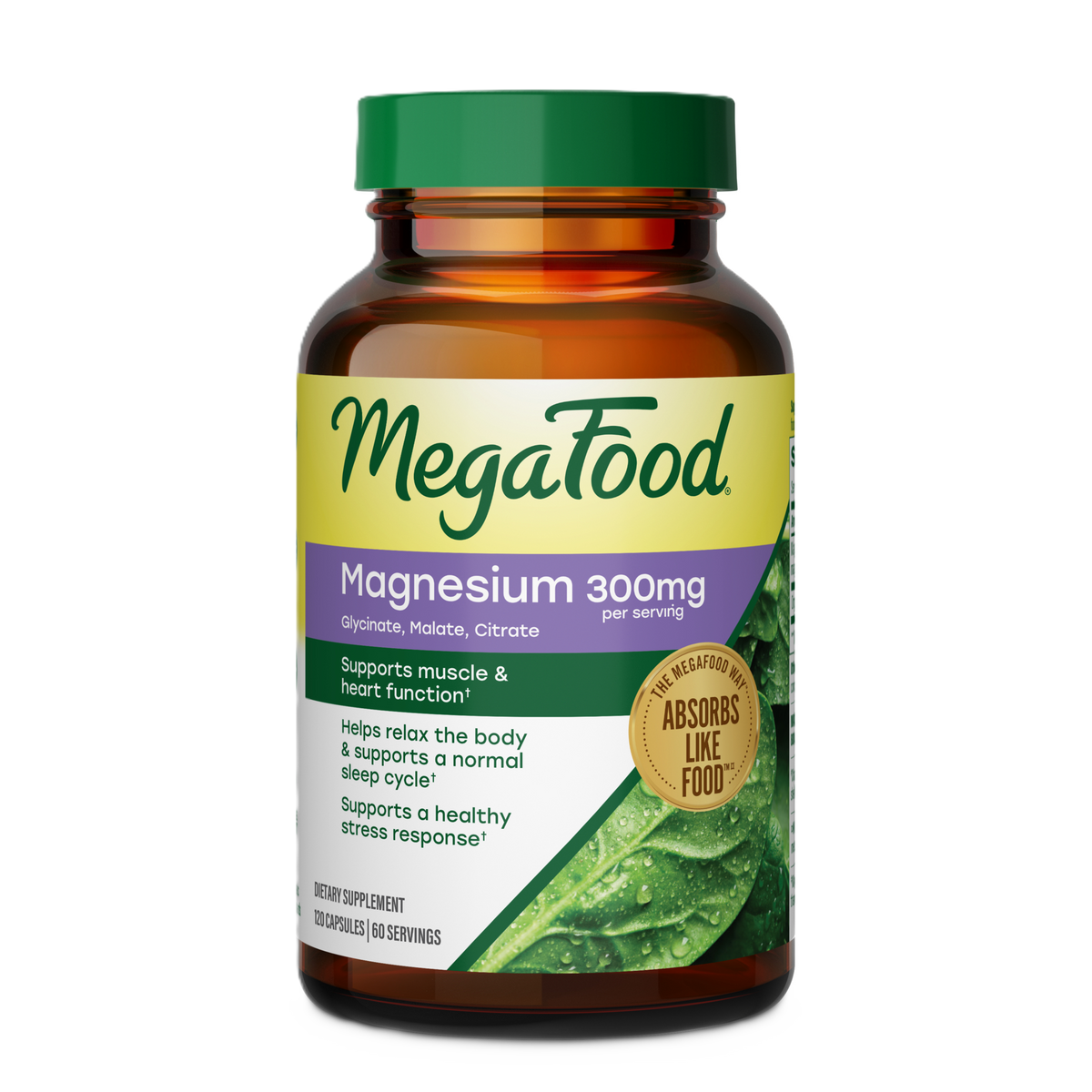


Magnesium is an essential mineral that is finally getting the attention it deserves!
It is involved in more than 300 enzymatic reactions in your body and works hard to keep you well. It’s like the backstage crew at a concert - invisible but essential to making the whole thing run smoothly. From supporting healthy muscle function to helping manage stress levels, magnesium is a powerhouse mineral - but not all magnesium supplements are created equal. If you’ve ever found yourself staring at the options and wondering, “What’s the difference between all these forms, and which form should I choose?” you’re in the right place.
Why Magnesium Matters
Before diving into the different forms, let’s get back to the basics. Magnesium plays an important role in:
- Muscle Function: Helps maintain normal muscle activity.
- Nerve Health: Plays a role in nerve signaling and function.
- Bone Support: Works alongside calcium and vitamin D to keep your bones healthy.
- Heart Function: Supports a healthy heart and blood pressure.
- Relaxation and Sleep: Promotes a sense of calm and supports restful sleep.
Despite its importance, many people don’t get enough magnesium. Modern diets and depleted soils mean we’re missing out. That’s where supplementation can help.
What Is Elemental Magnesium?
When you look at different forms of magnesium, you may notice that the numbers don't always seem to add up. That's because magnesium in supplements is typically combined with another compound, such as glycine in magnesium bisglycinate or citric acid in magnesium citrate.
Elemental magnesium refers to the amount of actual magnesium a magnesium compound provides. The rest of the compound comes from what the magnesium is paired with. Because those compounds have different weights, different forms contain different percentages of elemental magnesium.
|
Magnesium Form |
Magnesium Is Paired With |
Approx. Elemental Magnesium |
|
Magnesium oxide |
Oxygen |
~60% |
|
Magnesium citrate |
Citric acid |
~14.5–16.4%* |
|
Magnesium bisglycinate |
Glycine |
~14% |
|
Magnesium malate |
Malic acid |
~15.5%* |
|
Magnesium L-threonate |
L-threonic acid |
~7–8%* |
*The exact percentage of elemental magnesium can vary depending on the specific form of the magnesium compound.
So, for example, 100 mg of magnesium bisglycinate doesn't provide 100 mg of magnesium. Only a portion of that compound's weight comes from magnesium itself.
Does a higher percentage mean a better form of magnesium?
Not necessarily. Elemental magnesium tells you how much magnesium is present in a compound, not how well that form is absorbed or tolerated.
Fortunately, you don't have to do the math yourself. On a Supplement Facts panel, the amount listed next to Magnesium tells you how much elemental magnesium the product provides, regardless of the form or total weight of the magnesium compound.
The Many Faces of Magnesium
Not all magnesium supplements are the same, and the form you choose can make a difference depending on your goals. Here’s the rundown:
- What it is: Magnesium bound to two glycine molecules, an amino acid commonly found in foods that are especially rich in protein, such as meat, eggs, legumes, and seeds.
- Why it’s great: This form is gentle on the stomach and highly absorbable. It’s ideal if you’re looking to ease tension and support stress or sleep.
- What it is: Magnesium combined with citric acid.
- Why it’s great: This form has good bioavailability (degree and rate of absorption of a substance into a living system ) and acts as mild support for regular digestion.
- What it is: Magnesium paired with malic acid, an acid commonly found in fruits such as apples, cherries, and berries.
- Why it’s great: It is known to be one of the gentlest forms of magnesium available, and highly bioavailable. Great for those with sensitive systems.
- What it is: A form that was developed at MIT and is designed to facilitate transport into the brain (1).
- L-Threonate has been shown to help magnesium more effectively penetrate neurons, helping raise the brain’s magnesium levels, which is crucial to supporting cognitive function (2).
- Why it’s great: It’s specifically formulated to support cognitive health, overall brain function, and sleep (3).
- What it is: A common form of magnesium bound to oxygen. It is widely used in over-the-counter supplements and medications due to its high magnesium content by weight.
- Magnesium oxide is primarily used to support digestion, acting as a natural laxative (4). It is less bioavailable compared to other magnesium forms, meaning less magnesium is absorbed into the bloodstream.
- Why it’s great: It is an affordable option for addressing occasional digestive issues and supporting magnesium levels.
Common Magnesium Pairings
Magnesium, like all nutrients, doesn't work in a vacuum. In fact, it often works best when paired with other nutrients. Here are some common pairings and why they matter:
- Magnesium and Calcium: These two minerals work together to support cardiovascular health. We recommend taking both of these minerals two hours apart from your multivitamin to ensure they don't diminish micromineral absorption.
- Magnesium and Vitamin D: Magnesium supports the activation of vitamin D in the body for immune function and bone health.
- Magnesium and Zinc: Often taken together for immune support, muscle function, and overall wellness.
How to Choose the Right Magnesium for You
Once absorbed, magnesium is going to set to work performing its many roles. The compounds it is paired with, however, can impact how much of that magnesium is absorbed, as well as your user experience.
Your ideal magnesium supplement depends on your goals:
Want to maximize absorption? Go for magnesium glycinate or magnesium malate.
Digestive regularity support? Opt for magnesium citrate or oxide. These pairings are often associated with regularity and can be great for those that need extra digestive help.
Looking for cognitive or sleep support? Magnesium L-threonate focuses on these benefits with improved blood brain barrier permeability.
Even better? Consider a combo! Products that contain multiple forms of magnesium can provide superior absorption and digestive comfort as compared to single-form products.
Final Thoughts
Magnesium is a versatile and essential mineral that supports everything from relaxation and sleep to brain health. With so many forms available, it’s easier than ever to find one that suits your specific needs and works best with your body. Remember that blends can be a great choice for those looking to limit GI side effects and optimize absorption.
When choosing a magnesium, also consider the format that works best for you – MegaFood has a wide range including tablets, chews and powders.
Remember – the best format for you is the one that you’ll take every day. Start exploring what works best for you, and let magnesium be the silent partner in your journey to feeling your best!
Talk to your healthcare provider about your specific goals before adding any new supplements to your routine
Sources
- Inna Slutsky 1, Nashat Abumaria, Long-Jun Wu, Chao Huang, Ling Zhang, Bo Li, Xiang Zhao, Arvind Govindarajan, Ming-Gao Zhao, Min Zhuo, Susumu Tonegawa, Guosong Liu (2009). Enhancement of learning and memory by elevating brain magnesium
- Qifeng Sun, Jason G Weinger, Fei Mao, Guosong Liu (2016). Regulation of structural and functional synapse density by L-threonate through modulation of intraneuronal magnesium concentration
- Guosong Liu, Jason G Weinger, Zhong-Lin Lu, Feng Xue, Safa Sadeghpour (2015). Efficacy and Safety of MMFS-01, a Synapse Density Enhancer, for Treating Cognitive Impairment in Older Adults: A Randomized, Double-Blind, Placebo-Controlled Trial
- Hideki Mori, Jan Tack, Hidekazu Suzuki (2021) Magnesium Oxide in Constipation.



Leave a comment
This site is protected by hCaptcha and the hCaptcha Privacy Policy and Terms of Service apply.